Posts

Showing posts with the label Savage Worlds

Gaming - Industrial Application of the Elements, and When Things Go Wrong

 Previously , I discussed both an alternate "modern world" and its background, and how I would interpret portions of this in Savage Worlds.  Today, having dealt with an extreme case in " magic Chernobyl ," I will discuss an intermediate state, roughly equivalent to the late 19th and early 20th Centuries, and another industrial disaster. Picatinny Arsenal has been involved in armaments production in one form or another since the Revolutionary War; tradition has it that there was a cannon forge on the site in the 1770s and the Arsenal proper was established in the 1880s as a powder storehouse and later manufacturer.  Today it is perhaps best known as the place where mounting rails for firearms were standardized in the 1990s, but at one time it was the primary repository for ammunition on the east coast of the United States, a major center of manufacture and research in artillery propellant, payload, and fuzes, a role it continues to this day.  In the 1920s, a large p...
Gaming: The Mathematical Principles of the Elements

  Therefore, I posit the following propositions: First, that no elemental source may be created, nor destroyed, save by the action of elemental or physical forces in exponential proportion to the strength of the source created. Second, that the force created upon an elemental source is inversely proportional to the distance of the actor. Third, that the force exerted by an elemental source is exponentially proportional to the degree of purity of the source. Fourth, that the force exerted by an elemental source is exponentially proportional to the degree of difference in kind between sources. - Newton, Systema Mundi --- Previously , I discussed the evolution of a system parallel to modern science, of alchemical transformation based on the classical elements, up to Newton's publication of the Principia . What practical differences does such a system make? First, some terminology.  I've already discussed "binding" and "sources" without defining such elements.  ...

Statistics - The Electric Age - Der Haber-Prozess

Image
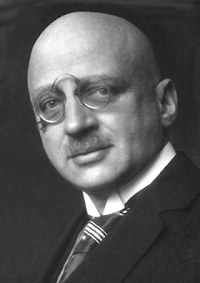
As I wrote up elsewhere , in the alternate Great War setting I am writing up, German scientist Dr. Fritz Haber, in our world the father of chemical warfare, took his prodigious talents a step further and reanimated corpses to solve Germany's desperate manpower shortages.  It is time to put some statistics to that. Dr. Fritz Haber, inventor of the Haber Process Dr. Fritz Haber's revolutionary, some would say immoral, process to reanimate the recently dead relies on modern chemistry and a large electric battery to overcome some of the cessation of natural function at death.  The results of the Haber Process - a term previously applied to the manufacture of nitrates for explosives - are not perfect, but they have allowed Germany to tap previously unimaginable personnel reserves.  These are neither the shuffling "Habers" of later horror movies, nor the mind-controlled "Zombi" popularized in American fiction after the occupation of Haiti, but rather a reanimated,...

Gaming - Worldbuilding, Homebrew, "The Road To Moscow"

I have elsewhere covered the   United States ,   Germany , and   Britain  in what I have increasingly started thinking of as the Electric Age.  Today, we shall be discussing Russia. As the meetings of Tesla and Rice, and Hülsmeyer and the German admiralty, more than show, sometimes small changes can lead to great outcomes.  Sometimes, however, events cannot be left to small changes.  Thus it was that, on March 13, 1881, no fewer than   three  bombers of the Russian domestic terror organization   Narodna Volya  (The People's Will) attempted to assassinate Tsar Alexander II.  Their failure was due to a combination of providence, poor bomb-making skills, and the swift, decisive action of Frank Joseph Jackowski, a Polish nobleman who had been riding with the Tsar in his carriage.  Jackowski bodily covered the Tsar until his guards could whisk him away to the Winter Palace, and in so doing doomed himself.  Jackowski was on...

Gaming - Worldbuilding, Homebrew, "The White Cliffs of Dover"

Continuing writing down thoughts on worldbuilding for a game I may never have a chance to run... No nation entered the Great War as well-prepared for global war, and as ill-prepared for a European war, as the United Kingdom.  Britain's global empire meant that the Royal Navy was the best-trained, best-equipped fleet in the world; meanwhile, the British Army, even with extensive experience in colonial war, was tiny compared to their Continental rivals.   British industry had catapulted the country out of the Enlightenment and into the Industrial Revolution, and the foundation of this industry was the railroad.  By the mid-1840s, two schools of thought had emerged and the first of the great industrial wars - the Gauge War - began.  The two schools were the Wide Gauge, championed by Sir Isambard Kingdom Brunel, and the Narrow Gauge, championed by George and Robert Stephenson.  Despite the term "Gauge War," Brunel and the younger Stephenson began their careers ...

Gaming - Worldbuilding, Homebrew, "The Attack of the Dead Men"

Continuing from   yesterday's post , discussing the American point of departure for a gaming world I've had brewing for a while - and the first of the Entente powers - time to cross the trenches and discuss the Central Powers, specifically Germany. The first forty years of German history were marked by rapid expansion of industrial and military power and an increasing rigidity of thought.  The nation that had produced Goethe and the revolutions of 1848 was now the nation of compulsory peacetime military service and international exhibitions devoted to artillery.  At the same time, though, the "Electric '80s" of America had a German mirror, spearheaded by Siemens & Halske of Berlin.  As Edison General Electric was to the American market, so Siemens & Halske was to Europe from Belfast to the Bosporus.  Siemens was one of the first true multi-national corporations, with branches in London, Constantinople, Moscow, and Tokyo. In the Wireless War, German resea...

Gaming - Worldbuilding, Homebrew, "With the Rough Riders on the Western Front"

 I have an idea I've been storing up for years, and have never actually bothered to put on paper, so here goes, since the odds of it coming to publication are, among my other hobbies, slim to none. In December of 1884, Thomas Edison walked into the offices of the Edison Machine Works to find his staff in an uproar.  A young Serbian engineer named Nikola Tesla was protesting that Charles Batchelor, the office manager, had promised him an improbably large bonus if he could complete a Herculean series of engineering challenges, and the last of them was now on Batchelor's desk.  When Edison asked what the number was, he was shocked: $50,000, enough to set the young Serbian up for life if he was careful with his money.  "Well, Charlie," reports have Edison saying, "better pay the man." Tesla proved almost impossible as an employee.  He was brilliant but erratic, exasperating, bad at taking notes and documenting his processes, and terrible at refining his ideas in...

On Feudalism and Obligation

 It has been a while since I did something specifically gaming-related, so I am returning to that topic.  Today, I will be discussing the Obligation Hindrance in Savage Worlds.  Of course, nothing I do is simple, so I will be approaching this through multiple lenses.  The difficulty with multiple lenses is that some part will always be in sharp focus, and some part will be distorted, but this is a subject where multiple interests of mine coincide. As written, the Obligation Hindrance is, like most Savage Worlds Hindrances, deliberately vague about what is exactly implied.  This allows it to be applied across a variety of circumstances.  Some settings, such as Deadlands, have a little more information - a Major Obligation is effectively a full-time job; a Minor Obligation is a part-time job (at least in terms of what we think of as work hours; the truth is a little more complicated in pre-20th Century settings).  The example given is military rank: Offi...