Posts

Showing posts with the label Writing

Book Review: Hungarian Hussar Sabre and Fokos Fencing, Russ Mitchell (Illustrated by Kat Laurange)

Image
  Several weeks ago, I had the good fortune to attend an all-day class taught by Russ Mitchell and Kat Laurange on Hungarian sabre, which is well outside my usual sword wheelhouse; I tend to focus on two-handed cutting weapons primarily intended for foot combat, whether it's longsword, katana, or Dane-axe.  I consider it fully appropriate to say that class changed how I approach training and teaching.  I picked up the first in the Austro-Hungarian military saber (I'm American, consarn it, and I'll spell saber like George Patton intended it!) series that day, read it within the week, and have been debating how to review it properly since. The reason for the delay is because I needed to separate the experience from the book, and also because there are at least three things that need to be reviewed when reviewing a historic martial arts manual.  The first is the manual as a book; the second is the martial system described as a martial system; the third is the historicit...
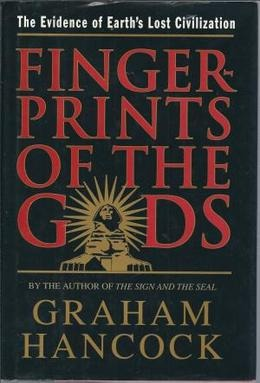
Book Review - "Fingerprints of the Gods," or Why I Hate Graham Hancock

Image
Ideas are dangerous things. In 1996, I was an extremely intelligent, but extremely inexperienced, teenager.  The combinaton of intelligence and inexperience is important in this context, because it creates a target audience for a certain type of book, inviting the reader to believe they're part of some hidden knowledge.  I read a lot of what I suppose could be called "conspiracy" books - Baigent, Lincoln, and Leigh's Holy Blood, Holy Grail , von Däniken, Sitchin, the whole nine yards.  I've re-read many of them since, and found them almost universally full of steaming garbage.  I've also watched them become increasingly mainstreamed - HBHG  as Da Vinci Code . von Däniken and company explicitly in Ancient Aliens. Then there is Graham Hancock. A quick history - Hancock was a moderately successful journalist working in a variety of difficult, dangerous places on difficult, dangerous topics.  He actually wrote a very good, and very successful, expose of the glo...

Book Review - Chinese Martial Arts Training Manuals: A Historical Survey (Kennedy & Guo, 2008)

Image
  I would love to give this book five stars out of five, but cannot. I found this book promising but deeply frustrating; it is essentially two books, and each of these books is itself a collection of essays rather than a cohesive whole.  The first book is a historiography of Chinese martial arts manuals, discussing the problems of age, the tendency of martial artists to exaggerate the accomplishments of the past, and the Republican Chinese renaissance of martial arts from a generally military field to a more broadly based cultural phenomenon.  This is the half written primarily by Brian Kennedy.  It is not perfect; Kennedy and Guo are very obviously xingyi practitioners and write what they know, and they are both far more familiar with developments in Taiwan than in China as a whole, including Hong Kong, the mainland, and Macau - again, writing what they know, and in the process illustrating the areas that they don't  know and didn't research as heavily. Before ...

Gaming - Industrial Application of the Elements, and When Things Go Wrong

 Previously , I discussed both an alternate "modern world" and its background, and how I would interpret portions of this in Savage Worlds.  Today, having dealt with an extreme case in " magic Chernobyl ," I will discuss an intermediate state, roughly equivalent to the late 19th and early 20th Centuries, and another industrial disaster. Picatinny Arsenal has been involved in armaments production in one form or another since the Revolutionary War; tradition has it that there was a cannon forge on the site in the 1770s and the Arsenal proper was established in the 1880s as a powder storehouse and later manufacturer.  Today it is perhaps best known as the place where mounting rails for firearms were standardized in the 1990s, but at one time it was the primary repository for ammunition on the east coast of the United States, a major center of manufacture and research in artillery propellant, payload, and fuzes, a role it continues to this day.  In the 1920s, a large p...

Gaming: The Mathematical Principles of the Elements

  Therefore, I posit the following propositions: First, that no elemental source may be created, nor destroyed, save by the action of elemental or physical forces in exponential proportion to the strength of the source created. Second, that the force created upon an elemental source is inversely proportional to the distance of the actor. Third, that the force exerted by an elemental source is exponentially proportional to the degree of purity of the source. Fourth, that the force exerted by an elemental source is exponentially proportional to the degree of difference in kind between sources. - Newton, Systema Mundi --- Previously , I discussed the evolution of a system parallel to modern science, of alchemical transformation based on the classical elements, up to Newton's publication of the Principia . What practical differences does such a system make? First, some terminology.  I've already discussed "binding" and "sources" without defining such elements.  ...

Gaming - The System of the World, Part 1

    Note, then, that for each Effect, there is a Cause, and that the Cause must be proportional to the Effect, and that Causes can be compounded by their increase in both magnitude and type; however, an imbalance in Causes must of necessity create an imbalance of Effects.  Further, the compounded Causes are such that no lesser Cause may produce a greater Effect, nor even shall be equal to the Effect, save by proportion, for in all matter there is resistance to action in proportion to its mass.     - Isaac Newton, "Principles of Alchemy," 1686 --- For about a year, I've been trying to figure out how to create what I think of as "magic Chernobyl," or rather a magical equivalent to the 1986 Chernobyl disaster without resorting to it as simply "big explosion, deal with it."  Finally, two days ago, it came to me pretty much fully-formed. The basis of diversion is that the classical Greek elements - earth, fire, air, and water - are expressions of universal ...

The Yagyû Comparison Project, Part 3: "Weapons Are Unfortunate Implements."

It feels appropriate to me to begin with the very first line of Munenori, as the first few paragraphs sum up much of his worldview. Hathaway: There is an old saying, "Weapons are in-auspicious tools.  They are shunned by Heaven's path.  Keep them ready without the intent to use them; that is Heaven's path." HPB (Ridgway): From antiquity it has been said, "Weapons are an inauspicious instrument, abhorred by the Way of Heaven, and to be used only when unavoidable.  That is the Way of Heaven." Satô: Here's what was said in the past: "Weapons are unfortunate instruments.  Heaven's Way hates them.  Using them when there is no other choice - that is Heaven's Way." Footnote 2: Allusion to Section 31 of Lao Tzu: Good weapons are unfortunate instruments.  People hate them.  So someone with Tao does not rely on them... Weapons are unfortunate instruments and not the wise man's instruments.  When he uses them because there is no other choice h...

The Yagyû Comparison Project, Part 2: The Texts Themselves

I own four English-language editions of of Heihô Kadensho .  I actually own more than that, but the others are copies or extracts of these four.  Two of them, the Satô ( The Sword and the Mind ) and Wilson ( The Life-Giving Sword ) translations, are what could be called "mainstream" translations - that is, they are either at least partially informed by, or endorsed by, members of the school, and are relatively complete, with supplementary material that will help make sense of the original and provide it further context.  They are broadly similar; Yagyû Koichi, the head of the school today, prefers Satô, while Dave Lowry and a handful of other American budô practitioners encouraged Williams to make his translation.  In other words, in quality terms there is little to choose between them, other than personal preference, and one cannot really go wrong with either.  The third was a copy that I happened to pick up at Half-Price Books that did not match either of...

The Yagyû Comparison Project, Part 1 - Historical Background, or, "Why This Matters"

Having completed my review of the various editions of Fiore currently on the market (I suppose I should write up the Hatcher edition of the Getty, but it's been out a few years and is kind of a gold standard!), it's time for a project I've been delaying for months. That project is a comparison of the four editions I have found of Yagyû Munenori 's first volume, "The Killing Sword."  To understand why I'd be doing that, and why there have been delays, one must first understand who Munenori was, what the formative environment of Yagyû shinkage-ryû was, and why the school persists. First, the Yagyû themselves.  All Japanese noble families trace themselves, at least nominally, to one of three origins, the Taira, the Minamoto, or the Fujiwara.  The Taira and Minamoto (or, if one is feeling particularly fancy, the Heike and Genji, after their On'myo, or "Chinese-style," readings) were descendants of emperors who had been mediatized as nobles no l...

Review of Winnick & Marsden's Edition of the Paris Fiore

Image
As I've said elsewhere, I believe that book reviews should provide what the reader really  needs to know up front, so here it is: I wanted very much to like this book.  The Hatcher and Chidester editions of the Getty and Morgan manuscripts, respectively, are impressive books both as Fiore manuscripts and as works of scholarship.  Unfortunately, the Paris manuscript is easily the most frustrating publicly available edition of Fiore, and that trend continues here. To understand why the Paris manuscript, before translators get involved, is so damn frustrating requires a little bit of explanation.  The Getty, the Morgan, and the Pisani Dossi were all at least made by someone familiar with Fiore's system, almost certainly Fiore himself, and by a series of linked artists - fairly well established in Chidester's edition of the Morgan .  The Paris manuscript, meanwhile, was made by someone who had no idea what the hell they were looking at, but sure liked the fancy draw...

Review of Michael Chidester's HEMA Bookshelf Reproduction of the Morgan Fiore

Image
We live in a golden age for the accessibility of historical sword sources for English-language readers.  Take Fiore, for instance.  In addition to Hatcher's excellent version of the Getty manuscript  we have Marsden's translation and interpretation of the Paris manuscript  and this - Michael Chidester's HEMA Bookshelf edition of the Morgan manuscript .  The only known Fiore that doesn't have an English-language release is the privately held Pisani Dossi. Reviews should tell you what you need to know up front, so this is the headline: the Morgan isn't my favorite Fiore manuscript (I think Getty's progression is better for training, and it's more complete), but I think this is probably my favorite of the modern Fiore manuscript editions.  That is a very tight race, but Chidester wins. Chidester is not a Fiore partisan, unlike, say, Windsor , but has a deep western sword background, such that he is the chief editor and director at Wiktenauer .  His backg...